
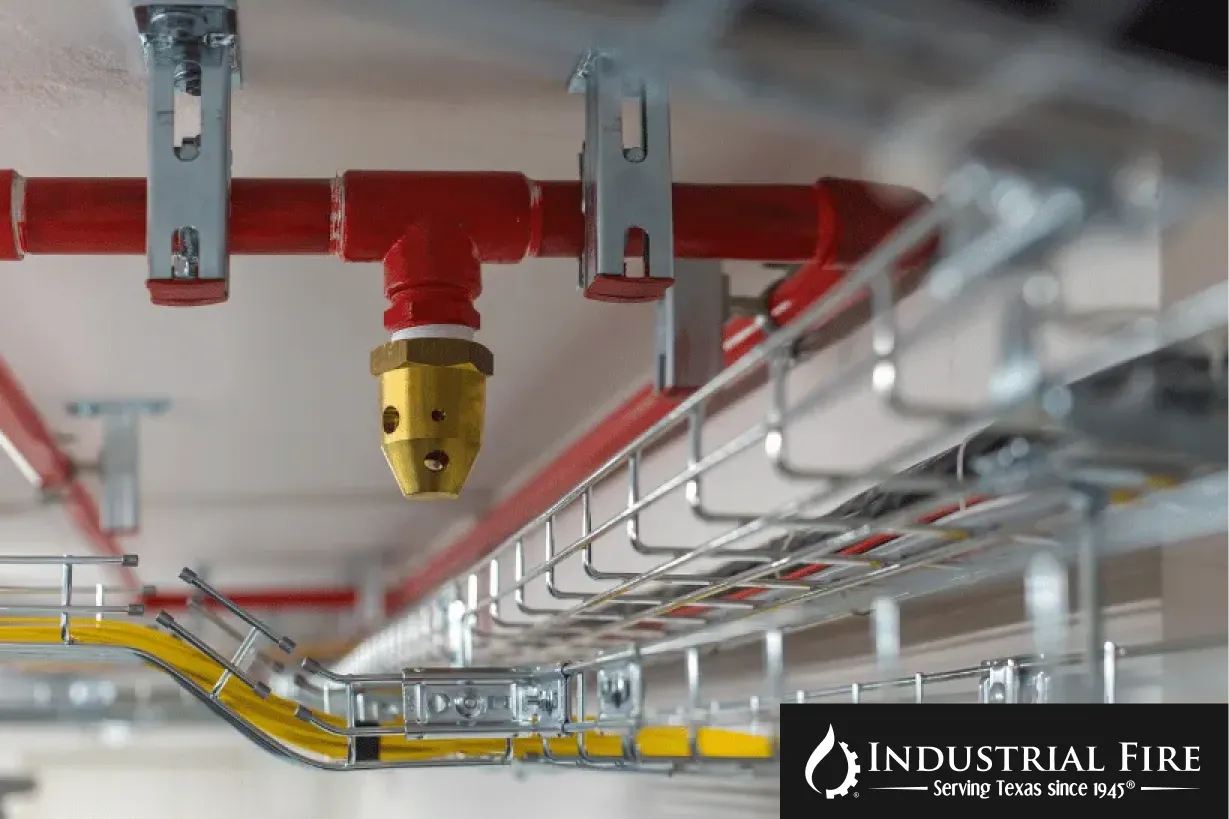
Most equipment in a facility proves its value every day. HVAC units maintain temperature, manufacturing lines produce goods, and servers process data.
A fire protection system is different because it provides zero return on investment until the worst day of your life. It sits dormant behind walls and above ceilings, waiting for a catastrophe that may never happen.
This lack of daily activity creates a dangerous blind spot for facility managers. It is easy to assume that because the system is not moving, it is not wearing out.
This silence creates a false sense of security.
The reality is that fire protection systems are complex mechanical assemblies subject to the same laws of physics as any other machine. Seals dry out, metal corrodes, and pressure drops. Without intervention, these critical life-safety assets slowly degrade until they are no longer capable of performing their job. Regular maintenance for fire suppression systems ensures that when an emergency strikes, the equipment works exactly as designed.
The Invisible Decay of Mechanical Components
Equipment degrades whether you use it or not. In fact, stagnation causes some of the most severe damage to fire safety infrastructure.
Water-based sprinkler systems are particularly prone to internal decay. When water sits stagnant in steel piping for years, it interacts with the metal. Oxidation begins immediately. Over time, this reaction creates rust and sludge that accumulates at the low points of the system.
Microbiologically Influenced Corrosion (MIC) presents an even greater threat. Bacteria in the water supply eat away at the pipe walls from the inside out. This process creates pinhole leaks that damage building interiors, but the internal byproduct is more dangerous. The resulting sludge can harden and block water flow. If a fire activates the pump, this debris rushes toward the sprinkler heads and clogs the nozzles.
Gas suppression systems face different challenges. These systems protect sensitive assets like server rooms or archives using agents like FM-200 or CO2. They rely on high-pressure cylinders to deploy the chemical agent instantly. Rubber seals and gaskets contain this pressure, but rubber loses flexibility over time.
Gas escapes through microscopic cracks that are impossible to detect with the naked eye. Over the course of a year, a cylinder can lose enough pressure to render it useless. If the pressure drops below operational limits, the system may fail to discharge or lack the force necessary to extinguish the flames. Routine inspections catch these pressure drops early, allowing technicians to recharge cylinders before the system becomes compromised.
Navigating Compliance and Liability
Building codes are not suggestions.
The National Fire Protection Association (NFPA) sets rigorous standards for the inspection, testing, and maintenance of fire protection. NFPA 25 acts as the benchmark for water-based systems, while other codes cover alarms and chemical suppression.
Local fire marshals enforce these codes with strict authority. They have the right to inspect your maintenance records at any time.
If a business can’t provide proof of up-to-date service, the marshal may issue citations or levy heavy fines.
In cases of severe negligence, they have the authority to shut down operations until the facility achieves compliance.
The consequences extend beyond municipal fines. Liability becomes a massive concern if a fire event occurs.
If an investigation reveals that the fire suppression system failed due to a lack of maintenance, the property owner faces potential lawsuits from injured tenants, employees, or customers.
A record of maintenance is your best legal defense.
Documented history proves that facility management took all reasonable steps to ensure safety. It demonstrates due diligence and shifts the narrative from negligence to compliance.
Related Article: Fire Marshal Inspection Checklist
The Financial Logic of Preventive Care
Some managers view maintenance contracts as an unnecessary overhead expense. This perspective fails to account for the financial impact of emergency repairs and insurance claims.
Reactive repairs always cost more than planned maintenance.
When a system fails unexpectedly, it typically demands emergency service. Fixing a burst pipe at 2:00 AM on a Sunday incurs premium labor rates.
Furthermore, the damage caused by a leak often exceeds the cost of the repair itself. Water from a corroded sprinkler line ruins inventory, destroys electrical infrastructure, and halts business operations.
Scheduled maintenance identifies these weak points while they remain minor issues. A technician can spot a corroded fitting or a dusty smoke detector during a standard visit. They replace the part during normal business hours, avoiding overtime charges and preventing a catastrophic failure.
Insurance carriers also calculate premiums based on risk. A facility that neglects its suppression systems represents a high liability. Many insurers offer reduced rates to businesses that maintain active service contracts.
Conversely, if a claim arises and the insurer discovers the system was neglected, they may deny coverage for the property damage. This leaves the business owner responsible for the full cost of rebuilding.
Extending the Life of Your Assets
Fire protection infrastructure represents a major capital investment. Replacing an entire sprinkler network or a gas suppression array costs a fortune. Routine care extends the usable lifespan of these assets significantly.
Corrosion management strategies stop pipes from rotting prematurely. Cleaning smoke detectors prevents “drift compensation” limits from maxing out, which would otherwise force you to buy new units. By investing in maintenance, businesses delay the need for expensive system replacements by years or even decades.
Preventing False Activations
System failure does not always mean a failure to activate. It also includes activating when there is o fire.
A false discharge causes massive disruption.
Imagine a server room protected by a clean agent system. If a faulty sensor triggers a discharge, the facility loses thousands of dollars in chemical agents instantly. While the agent itself is safe for electronics, the downtime required to reset the system and refill the tanks halts operations.
In water-based systems, an accidental trip causes severe water damage. A dry pipe valve that fails due to a lack of maintenance might flood a warehouse. Regular inspections calibrate sensors and service valves to prevent these costly misfires. This reliability provides peace of mind to business owners who know their operations are safe from both fire and accidental discharge.
Don’t Forget the Extinguishers
While automated systems do the heavy lifting, manual fire extinguishers often stop a fire before the sprinklers ever trigger. Occupants use these devices to suppress small fires in the early stages.
These canisters require their own maintenance schedule. NFPA 10 outlines the standards for portable extinguishers, requiring annual professional maintenance.
During this check, a professional inspects the firing mechanism and weighs the cylinder to check for agent loss. Every few years, the extinguisher requires a hydrostatic test to ensure the cylinder can withstand high pressure. Neglecting these devices turns a life-saving tool into a useless paperweight.
Related Article: Do Fire Extinguishers Expire?
What Happens During a Professional Inspection
True maintenance involves more than a technician walking around with a clipboard. It requires a systematic test of mechanical and electrical components to simulate activation.
Certified professionals follow a rigid checklist to verify readiness. They manipulate valves, test batteries, and measure pressure. They ensure the system meets its original design specifications.
During a comprehensive service visit, the process typically includes specific mechanical tests.
Flow Tests
Technicians open main drain valves. They verify that the water supply delivers adequate pressure and volume. This confirms the water supply remains strong enough to fight a real fire.
Trip Testing
For dry pipe and deluge systems, the technician activates the valve. They ensure it opens completely and without delay. In an emergency, every second counts.
Alarm Verification
The inspection confirms communication. The system must send the correct signals to the monitoring station. It must also trigger local strobes and sirens to alert building occupants to evacuate.
Gauge Calibration
Pressure gauges are checked against a master gauge. This ensures the readings on the manifold are accurate. Relying on an old gauge is a gamble you cannot afford to take.
Battery Load Testing
Backup batteries in the control panel undergo load tests. This proves they can run the system during a power outage. Fire protection must function even when the building goes dark.
Visual Inspection
Every sprinkler head, nozzle, and pull station gets inspected. Technicians look for paint, dust, physical damage, or obstruction. A single coat of paint on a sprinkler head can stop it from working.
This level of scrutiny exposes hidden problems. A pressure gauge might read “normal” because the needle is stuck, even if the tank is empty. A visual check misses this fatal flaw.
A physical test reveals the truth immediately.
Reliability is a Choice
A fire protection system is a promise to your employees and your building. It promises that when disaster strikes, a mechanism is in place to save lives and limit destruction.
Regular maintenance for fire suppression systems keeps that promise alive.
It satisfies legal obligations and insurance requirements. It protects the bottom line from emergency repair costs. Most importantly, it ensures that when the alarm sounds, the system responds with immediate and effective action. Business owners who prioritize fire safety through professional upkeep build a resilient organization capable of withstanding risk.